Short answer: Yes. Most modern split air conditioners are reversible heat pumps and heat a room efficiently in winter by pulling heat from the outside air. Used for heating they are air to air heat pumps. To rely on one in a London winter, it must be sized for the room's heat loss on a cold day, not just for summer cooling.
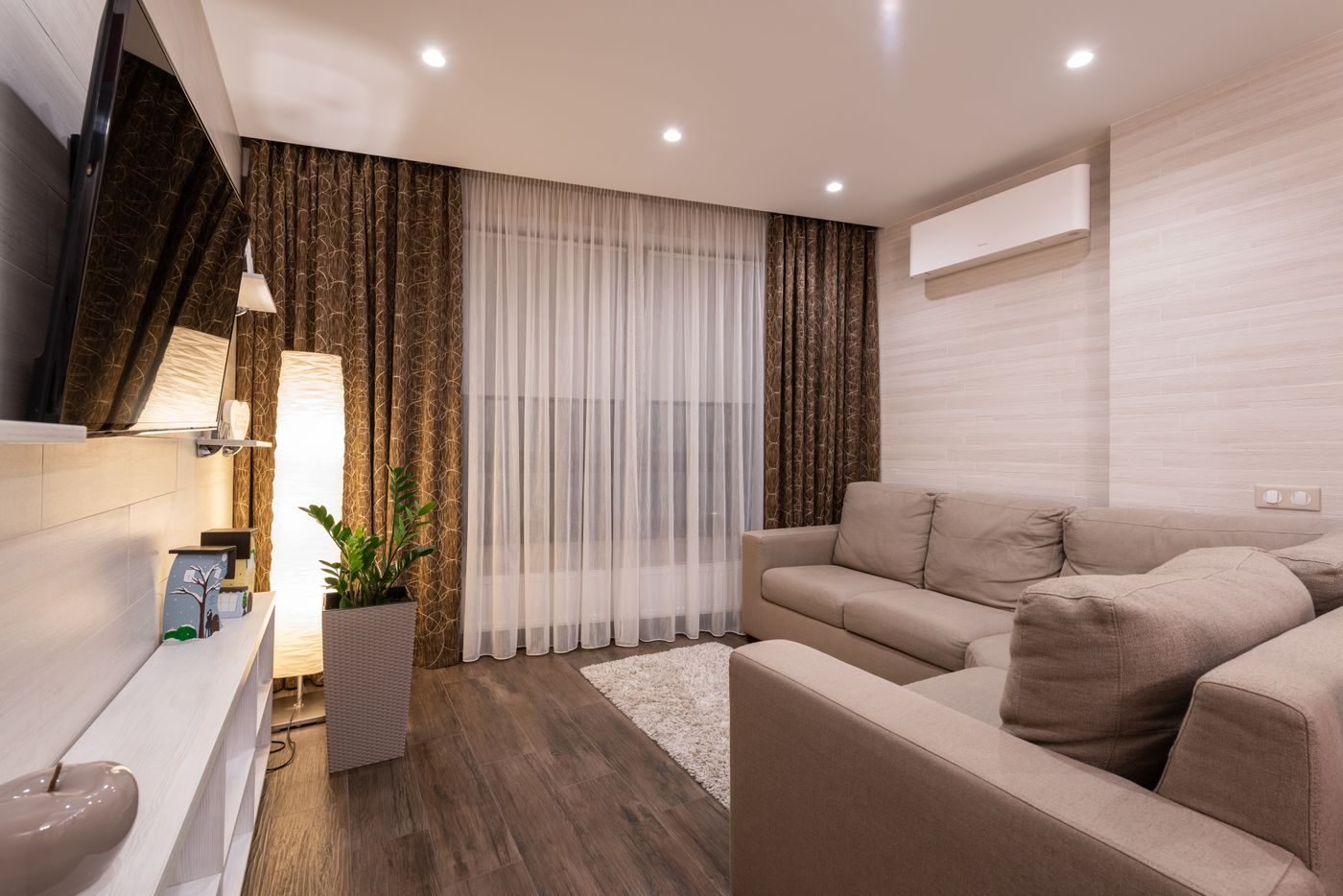
How heat mode works
An air conditioner cooling a room takes heat from inside and dumps it outside. A reversible unit can run the same cycle backwards. In heat mode, the outdoor coil gets colder than the outside air and absorbs heat from it, even on a frosty day. The compressor raises the temperature of the refrigerant, and the indoor unit releases that heat into the room.
That is exactly what an air to air heat pump does. The Energy Saving Trust describes air to air heat pumps as operating in much the same way as many air conditioning systems, and notes that although air conditioning is associated with cooling, many systems can also heat.
Why it is efficient
Because it moves heat rather than making it, a heat pump delivers more heat than the electricity it uses. The seasonal figure is called SCOP, Seasonal Coefficient of Performance, shown on the product label. A plug in fan heater or oil filled radiator is one for one: one unit of electricity gives one unit of heat. That gap is why reversible units are popular in rooms that radiators do not reach well, and in flats heated by electric panels.
What happens on cold days
| Situation | What you notice | Why |
|---|---|---|
| Mild winter day | steady warm air, quiet | easy conditions, high efficiency |
| Near freezing and damp | warm air pauses for a few minutes | defrost cycle melting ice on the outdoor coil |
| Very cold snap | unit runs harder and louder | less heat in the air, more work for the compressor |
| Morning warm up | indoor fan waits before blowing | unit warms its coil first to avoid cold draughts |
Defrost cycles are normal. Water will drip from the outdoor unit when it defrosts, so the unit needs a spot where that water can drain safely and will not freeze on a path.
Sizing for winter, not just summer
This is the most common mistake. A unit chosen to cool a bedroom on a July evening may not be big enough to heat it on a January morning, especially in an older house with solid walls and single glazed sashes. If you plan to rely on it for heating, the installer should work out each room’s heat loss on a cold day and size the unit for whichever is bigger, the heating or cooling load. The Energy Saving Trust makes the same point: if heating is a main reason for installing, choose a system designed and sized to meet your heating needs.
Ealing homes: where it works well
Ealing has a mix of homes that suit heat mode in different ways:
- Edwardian and Victorian houses in Ealing Broadway, Pitshanger and Northfields, where back extensions and loft rooms often sit at the end of a long radiator run and stay cool in winter
- 1930s semis in Greenford, Perivale and Hanwell, where a reversible unit in the living room can take a lot of load off the gas boiler in spring and autumn
- garden offices, where a small split heats in winter and cools in summer without running radiators out to the garden
- flats around Ealing Broadway and Acton with electric heating, where an air to air system replaces panel heaters
See our Ealing area page for the local planning position, including the borough’s 29 conservation areas.
Can it replace the boiler?
It can replace the heating side if the whole house is designed for it, usually as a multi split with an indoor unit in each main room. Most air to air systems do not heat water, so you would still need a cylinder with an immersion heater, an electric shower or another hot water source. The Boiler Upgrade Scheme lists £2,500 towards an eligible air to air heat pump that replaces fossil fuel or electric heating and is sized for the full space heating need, fitted by an MCS certified installer (gov.uk). As of October 2026, the Energy Saving Trust says MCS certification for air to air installers is not yet available.
A common middle path in Ealing is to keep the gas boiler for hot water and cold snaps while the reversible units heat the rooms you use most for much of the year and cool them in summer.
Planning: heating helps
In England, the permitted development right for heat pumps under Class G has a condition that the heat pump is not used solely for cooling (Planning Portal). A reversible system installed and used for heating meets that condition. It still has to meet the size, siting and 37 dB(A) noise rules, and listed buildings and some conservation area positions need consent.
Getting the most from heat mode
- set a steady temperature rather than switching off and boosting
- keep filters clean, as clogged filters cut heat output
- keep leaves and snow clear of the outdoor unit
- point the louvres down in heat mode, as warm air rises
- use the timer to start warming before you get up
Our air to air heat pump page explains how we design for winter heat, and our guide to running costs shows how to estimate what heating will cost.
Quick questions
Is it cheaper to heat with air conditioning than electric heaters?
Generally yes. A reversible air conditioner moves several units of heat for each unit of electricity, while a plug in electric heater turns one unit of electricity into one unit of heat.
Why does my air conditioner stop blowing warm air in winter?
It is probably defrosting. In cold, damp weather ice builds on the outdoor coil, and the unit briefly reverses to melt it. Warm air resumes after a few minutes.
Does using air con for heating affect planning?
It helps. In England, a heat pump can be permitted development only if it is not used solely for cooling, so a system used for heating sits within the rules more easily, provided every other condition is met.
Last updated 23 October 2026. Written for homes in London. Rules can change, so check the linked sources for the latest position.