Bedrooms and lofts
Bedroom and loft air conditioning in London
For a London bedroom or loft conversion, a quiet wall mounted split system is the usual answer. It cools the room without an open window, has a night mode that runs very quietly, and the outdoor unit can sit on a rear wall or flat roof. Lofts often need a bigger unit than the floor area suggests.
Start a quote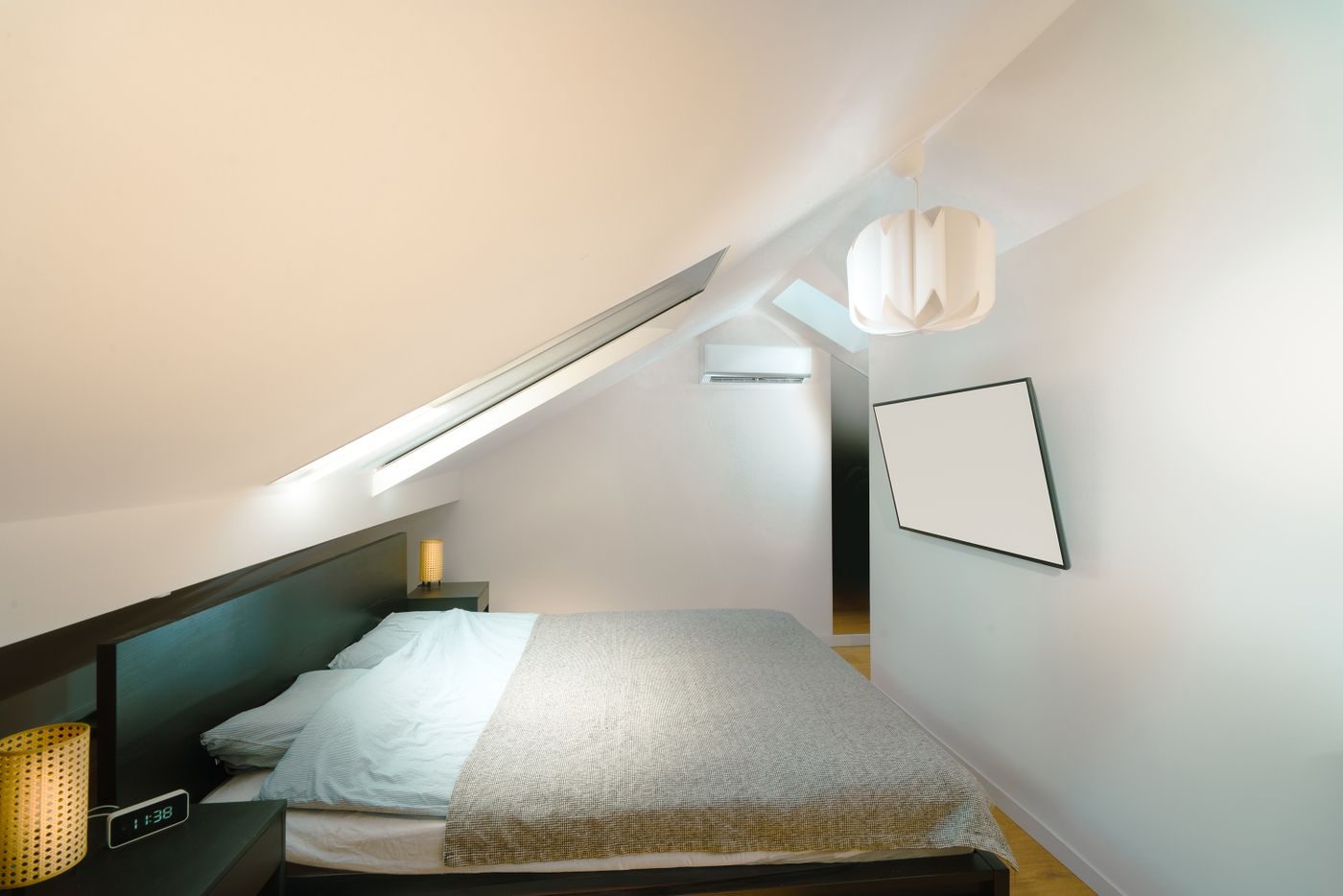
Air conditioning quote
Tell us about the rooms. The installer will confirm sizes and positions on a free survey.
- 01The space
- 02Your building
- 03What you want
- 04Your details
The space
Which rooms need cooling?
Pick all that apply.
The space
How many indoor units do you think?
Your building
What type of property?
Your building
Where could the outdoor unit go?
Your building
What are the outside walls?
What you want
Do you want it to heat as well?
Most split systems can run in reverse as an air to air heat pump.
What you want
When would you like it fitted?
What you want
What is the postcode?
So the right engineer for your area picks it up.
Your details
Your quote is confirmed at a free survey
Unit sizes depend on room size, windows, insulation and where the outdoor unit can go. The installer checks all of that in person before giving a fixed price.
You need this when
- Your loft conversion is the hottest room in the house all summer
- You sleep badly from June to September
- You keep windows shut at night because of traffic, sirens or aircraft
- A baby's room is over the recommended temperature on warm nights
- A portable unit is too loud to sleep next to
Why London lofts and top floors get so hot
Heat rises inside a house and the roof takes the full sun all day. A loft conversion under a slate or tiled roof, often with big rear dormer windows and roof lights, can be several degrees hotter than the ground floor. On the hottest nights in London, the heat island effect means the outside air stays warm too, so opening the window does little. The Met Office explains that after sunset, temperatures stay higher in urban areas than in the countryside around them.
Loft conversions are everywhere in London's Victorian and Edwardian terraces, from Wandsworth and Fulham to Walthamstow and Ealing. They make great bedrooms and offices in winter and very hard ones in a heatwave.
Choosing a unit you can sleep next to
The sound level that matters in a bedroom is the lowest fan speed, often called quiet or night mode. Manufacturers publish it in decibels for the indoor unit. Look for the lowest figure you can find for your size of room and ignore the headline number at full power.
Position matters too. Air should flow across the ceiling and down, not straight onto the pillow. In a loft with sloping ceilings, the unit usually goes on the gable wall or a dwarf wall under the dormer. A sleep setting that lets the temperature drift up slightly through the night saves energy and avoids waking up cold.
Sizing for a hot room, not just a small one
Floor area is only part of it. A loft room with a big west facing dormer and thin roof insulation needs more cooling than a ground floor room of the same size. We look at:
- floor area and ceiling height, including sloping sections
- glazing size and direction, and any roof lights
- roof insulation, which you can often see from the eaves cupboard
- whether it is used during the day as an office
Getting this right is what stops the unit running flat out all afternoon.
Pipes, drains and the outdoor unit
In a loft, pipes usually go through the eaves and down the rear wall in a neat cover, or through a ceiling void to the back of the house. Condensate from the indoor unit has to drain away, either by gravity to a gutter, soil stack or waste pipe, or with a small pump where there is no fall.
The outdoor unit normally goes on the rear wall at ground floor level or on the flat roof of a rear extension, at least 1 metre from the edge. Putting it high on a rear wall is possible but makes servicing harder. Planning rules and the noise at your neighbour's window apply just as they do for any other room.
Planning for a bedroom unit
A bedroom unit follows the same planning rules as any other. On a house in England, a reversible unit that also heats can be permitted development if it passes the 37 dB(A) noise calculation at the neighbour's nearest bedroom or living room window and meets the size and siting limits. Neighbours' bedroom windows are often the closest point on a terrace, so the outdoor unit position is chosen with that in mind. Flats, listed houses and cooling only units need consent.
What affects the price
Bedroom and loft jobs are priced after a survey. The main drivers are the cooling size needed, the pipe route from the top of the house, access for the outdoor unit and whether a condensate pump is needed.
| What | Price |
|---|---|
| Single bedroom split system | about £1,900 for a single room air to air system (Energy Saving Trust typical figure) |
| Loft room with long pipe run down the house | quote on survey |
| Condensate pump where no drain is near | quote on survey |
| Second bedroom on the same outdoor unit (multi split) | quote on survey |
No prices are shown on this site. Every job is priced after a look at it, by photo or a visit.
How the job runs
-
Tell us the room size, which way the windows face and whether it is under the roof. A photo of the dormer or roof lights helps.
-
We check roof insulation, glazing, the eaves or dormer for a pipe route, and where the outdoor unit can sit at the rear.
-
We choose a unit by its night mode sound level as well as its cooling output, and position it so air does not blow straight onto the bed.
-
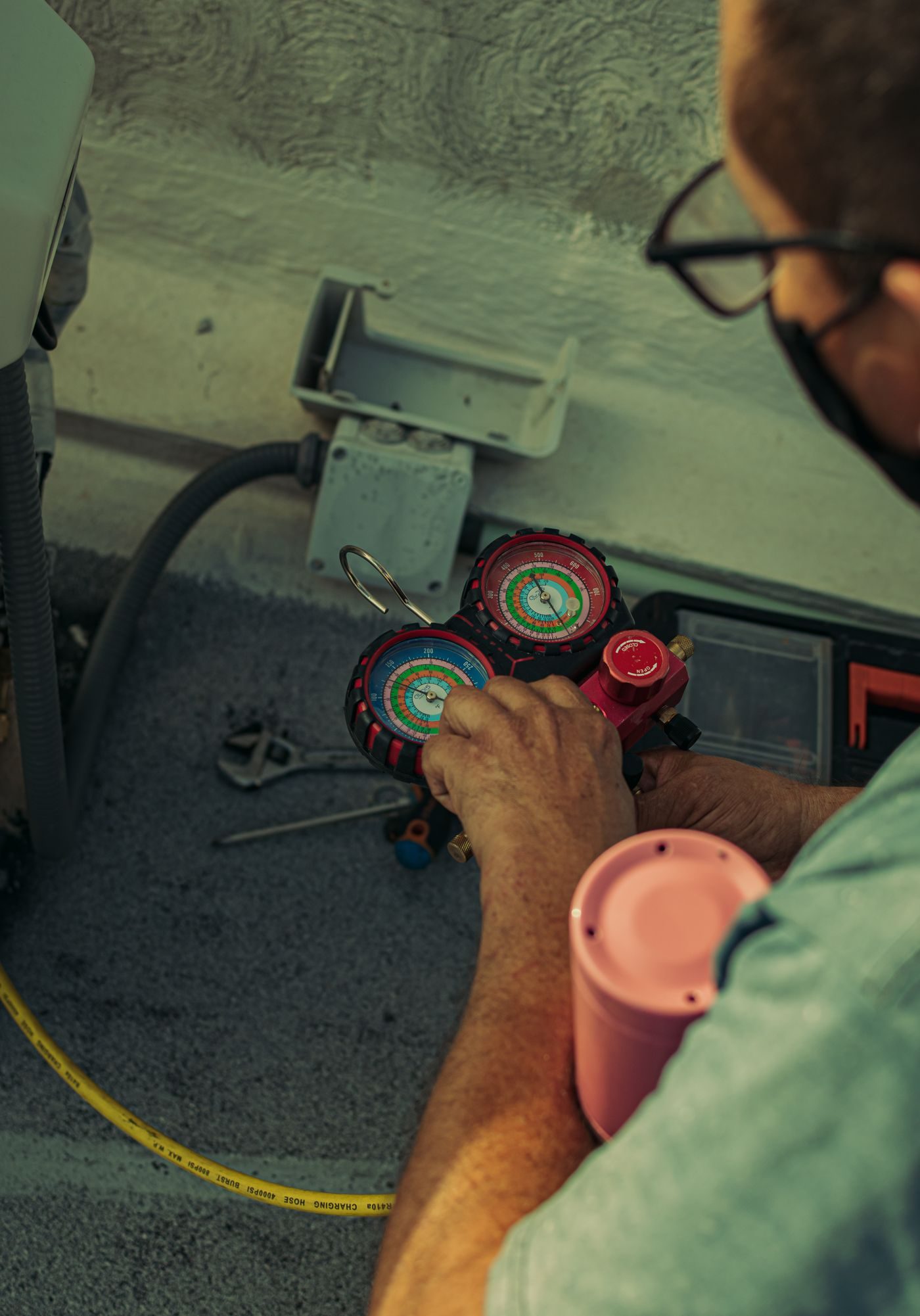
We fit the indoor unit, run the pipes through the eaves or down the rear wall, commission the system and set up a night programme with you.
Every price is agreed in writing before work starts.
Start a quoteIs it bad to sleep with air conditioning on?
No, as long as the air is not blowing straight at you and the filters are clean. Use a sleep mode that lets the temperature rise slightly overnight, and set it to a comfortable level rather than as cold as possible.
What size air conditioner do I need for a bedroom?
It depends on the room, not just the floor area. Sun, glazing and roof insulation all change the answer, which is why a loft bedroom often needs a larger unit than a ground floor room of the same size.
Can I put air conditioning in a loft conversion?
Yes. Wall mounted split units work well, with pipes through the eaves or down the rear wall. The outdoor unit usually sits on the rear wall or a flat roof.
Are portable air conditioners any good for bedrooms?
They help a little but are noisy, and the hot air hose leaks heat back into the room. In a sash window the gap rarely seals. A split system is quieter and far more effective.
Where
Bedrooms and lofts across London
air conditioning unit for bedroom
Bedroom air conditioning in London: sleeping through a heatwave
Read the articleloft conversion air conditioning
Air conditioning for a loft conversion in London
Read the articleair conditioning for home office
Air conditioning for a home office or garden office
Read the article
Bedrooms and lofts
Send it through and get a reply
Describe the rooms or the problem in a sentence. Photos of the wall and the outside space help if you can text them later.