Short answer: For a home office or garden office, a small wall mounted split system is usually the best answer. It handles afternoon sun and the heat from computers and screens, runs quietly enough for video calls, and heats the room in winter. Garden offices also need a suitable power supply, and the outdoor unit still has to meet planning rules.
Why home offices overheat
A home office is used in the daytime, often all day, and frequently in the room that was least wanted for anything else: a small back bedroom facing west, a loft room under the roof, or a garden building with big glass doors. On top of the sun, a laptop, two screens, a printer and you all add heat. By mid afternoon in a London summer, that room can be the hottest in the house.
The Met Office’s London City Pack puts London’s average July high at 23.5°C, the highest in the UK, and that is before a heatwave. Rooms with a lot of glass get far hotter than the air outside.
Sizing for daytime use
A home office is sized differently from a bedroom. A bedroom needs cooling in the evening and overnight, when the sun has gone. An office needs it in the afternoon, when the sun is strongest and the equipment is on.
| Factor | Bedroom | Home office |
|---|---|---|
| Main hours | evening and night | daytime, especially afternoon |
| Sun on windows | lower when in use | at its peak |
| Equipment heat | little | computers, screens, printer |
| Noise priority | very quiet at night | quiet enough for video calls |
| Heating in winter | useful | very useful for garden offices |
That usually means a slightly larger unit than the floor area alone suggests, particularly for a west facing room or a garden office with glazed doors.
Garden offices
Garden offices are common in Ealing, where many houses in Pitshanger, Northfields, West Ealing and Hanwell have long back gardens. They are usually timber frame or insulated panel buildings, and they heat up quickly in sun and cool quickly in winter. A small split system suits them well:
- the outdoor unit sits on the side or back wall of the garden building, often far from any neighbour’s window
- the pipe run is short, so the install is simple
- it heats the space in winter, replacing an electric heater
Two things need checking first. The power supply to the garden building must be able to take the extra load, and a new circuit is notifiable under Part P in England, so it must be done by a registered electrician or signed off by building control (Planning Portal). And the outdoor unit must still meet the planning rules for heat pumps.
Planning
In England, a heat pump within the curtilage of a house, including on a building in the garden, can be permitted development under Class G if it is not used solely for cooling, meets the size limit and the 37 dB(A) neighbour noise calculation, and the property is not listed (Planning Portal). Ealing has 29 conservation areas, including the Brentham Garden Estate and Ealing Common, and in those areas the unit must not face a highway. Most garden offices are well away from the street, so this is rarely a problem. Our Ealing area page has more.
Home offices inside the house
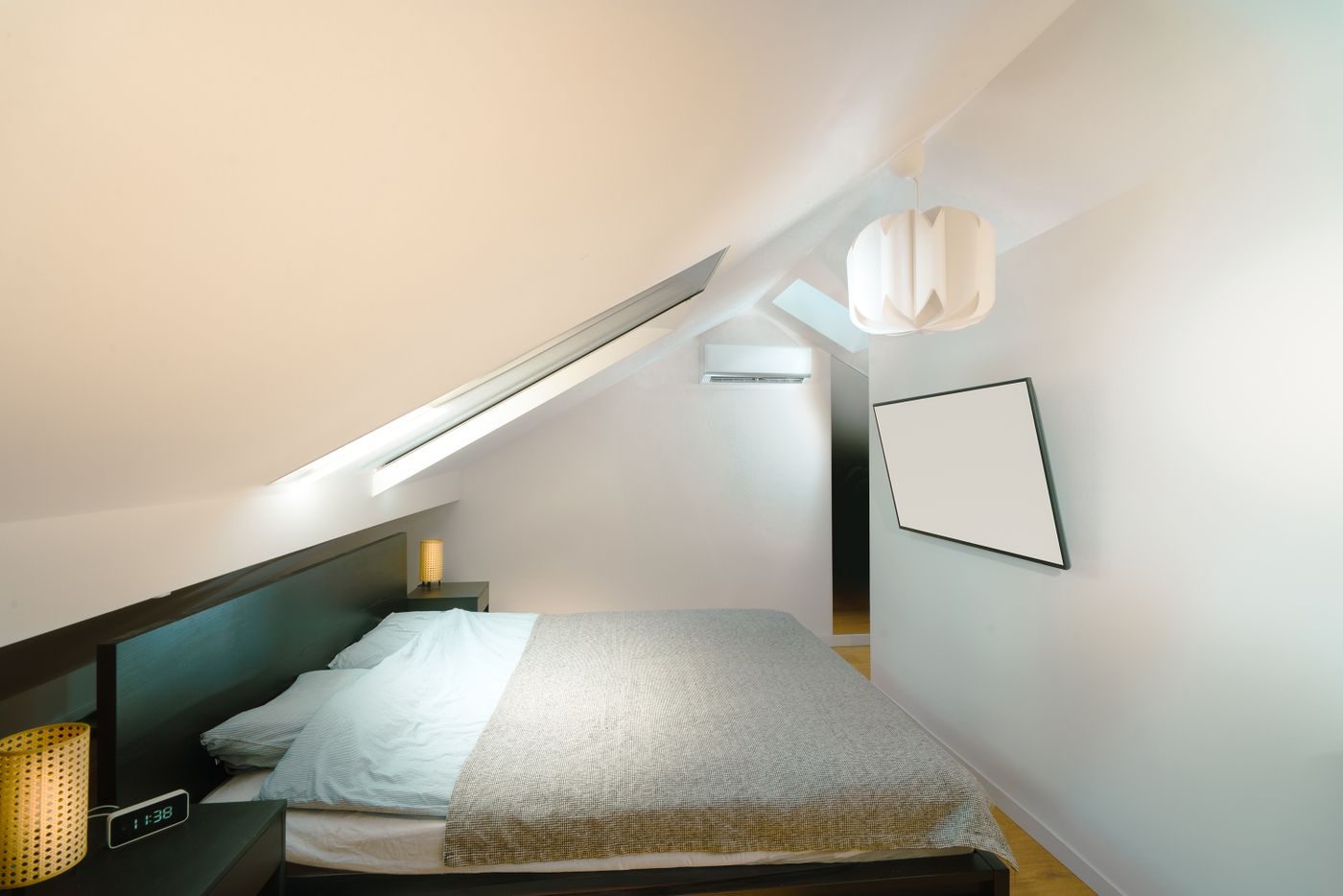
For a back bedroom or loft office, the install is the same as any bedroom split system. Pipes go through the outside wall, or through the eaves in a loft, and the outdoor unit sits on the rear wall or a flat roof. If you already plan to cool bedrooms, a multi split can include the office on the same outdoor unit, though it will heat or cool in the same mode as the other rooms. If you want the office cooled every afternoon while bedrooms are off, a separate single split may suit better. Our guide to single split or multi split explains the trade off.
Noise on calls
Video calls pick up fan noise easily. Look at the indoor unit’s figure at low and medium fan speed, not just at full power, and place the unit so it is not directly behind you or blowing at your microphone. A unit with spare capacity can run more slowly and quietly.
Simple measures that help too
Air conditioning works best alongside basic shading:
- blinds or external shading on west and south windows
- turning off equipment you are not using
- keeping the door closed so the unit only cools the office
- in a garden office, reflective film on large glazed doors
Garden office power supplies
Many garden offices are fed by an armoured cable from the house, sometimes installed with only lights and a few sockets in mind. Adding air conditioning increases the load, so the electrician needs to check:
- the size and condition of the cable to the garden building
- the protective devices at the house consumer unit
- whether a new dedicated circuit is needed for the outdoor unit
- earthing arrangements for the outbuilding
If a new circuit is needed, the work is notifiable under Part P in England, so it must be done by an electrician registered with a competent person scheme or notified to building control. Keep the electrical certificate with the air conditioning paperwork.
Next steps
Tell us the room, which way it faces, what equipment you use and, for a garden office, how it is powered. Our bedroom and loft air conditioning page explains how small room installs run from survey to commissioning.
Quick questions
What is the best air conditioner for a home office?
A wall mounted split system sized for the room, the sun it gets and the equipment in it. It is much quieter than a portable unit, which matters on calls.
Can I put air conditioning in a garden office?
Yes. A small split system works well. The garden building needs a suitable electricity supply, and a new circuit must meet Part P.
Do I need planning permission to air condition a garden office?
A heat pump within the garden of a house can be permitted development if it also heats and meets the size, siting and noise rules. A cooling only unit, a listed property or some conservation area positions need consent.
Last updated 23 October 2026. Written for homes in London. Rules can change, so check the linked sources for the latest position.