Short answer: If your air conditioning runs but does not cool, check the mode, set temperature, remote batteries and filters first. Then make sure the outdoor unit is running and not blocked. If those are fine, the usual causes are a dirty coil, a failed fan, or low refrigerant from a leak, which needs an F-gas qualified engineer.
Checks you can do safely
Work down this list before booking a visit. Several are quick fixes.
| Check | What to look for |
|---|---|
| Mode | set to cool, not fan, dry, auto or heat |
| Set temperature | below the room temperature, not at the top of the range |
| Remote | fresh batteries, and the display shows what you expect |
| Filters | lift the front panel: grey matted filters choke airflow |
| Louvres | open and moving, not stuck shut |
| Outdoor unit | fan turning and unit humming when cooling is on |
| Around the outdoor unit | no leaves, bags, covers or stored items blocking it |
| Power | isolator on, no tripped circuit breaker |
| Error code | note any flashing lights or code on the display |
If cleaning the filters and fixing the settings does not help, switch the unit off and book a check.
Faults an engineer will look for
- Dirty indoor coil: even with clean filters, fine dirt builds up on the coil and cuts heat transfer
- Fan faults: a failing indoor or outdoor fan motor moves less air, so less heat is moved
- Low refrigerant: always a leak, often at a flare joint or valve
- Sensor or board faults: the unit may think the room is cooler than it is
- Compressor problems: the outdoor unit may hum, click or trip without starting
- Ice on the coil: from low airflow or low refrigerant, blocking airflow further
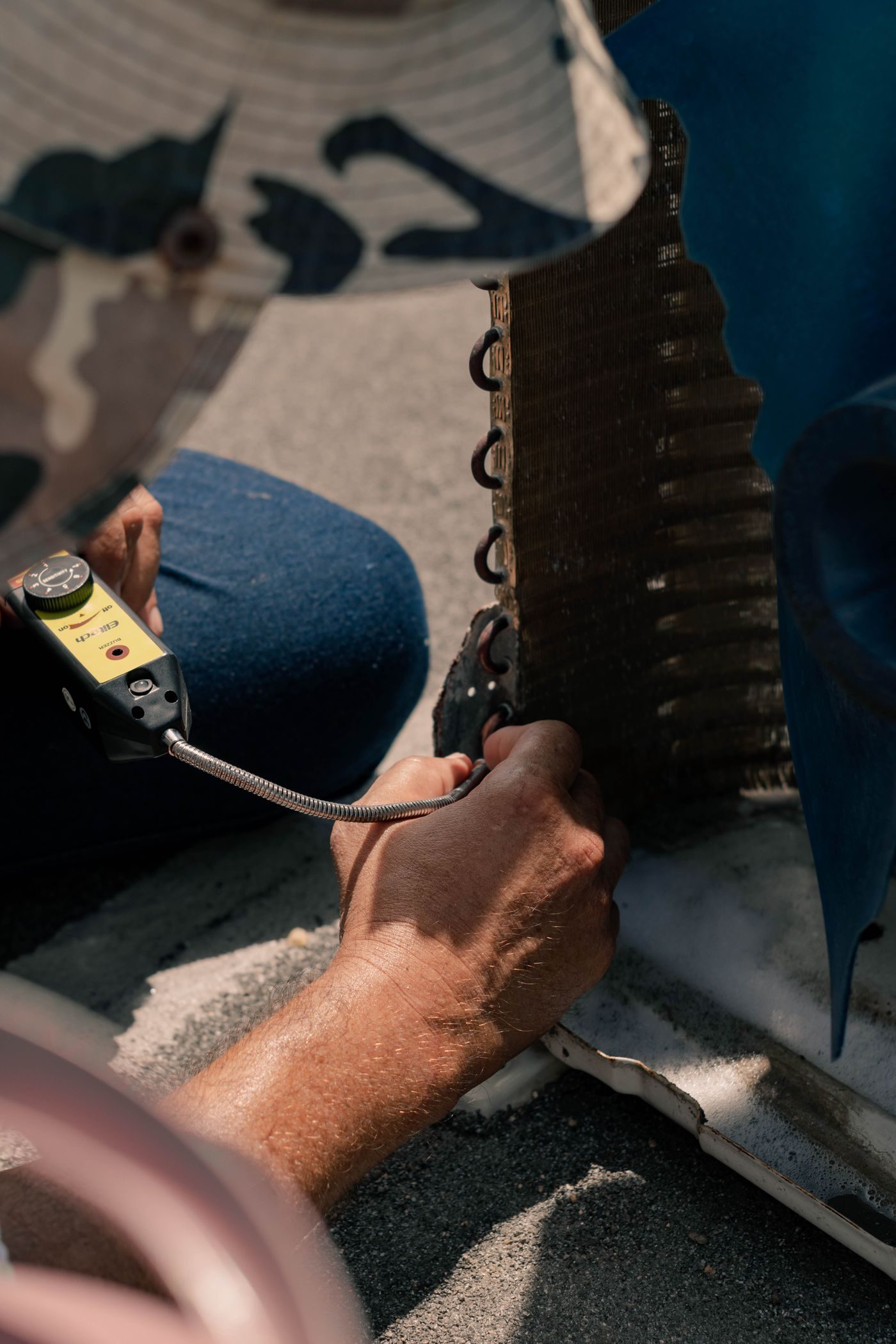
A diagnosis visit checks temperatures across the coil, refrigerant pressures, fan speeds and electrical readings to find the actual cause rather than guessing. Our repair page explains how that works.
When the unit is working but losing the battle
Sometimes nothing is broken. The room simply gains more heat than the unit can remove. This is common in glass towers at Canary Wharf and on the Isle of Dogs, where floor to ceiling glazing on south and west facing floors lets in a lot of sun. The Greater London Authority’s heat risk study names Tower Hamlets among the central boroughs with higher heat risk for homes, and Approved Document O lists E14 and E1 among London’s high risk overheating postcodes for new homes (Approved Document O).
Signs of a capacity problem rather than a fault:
- the unit cools well in the morning but not on late afternoons
- air from the unit is cold, but the room stays warm
- it struggles only in heatwaves
Blinds or reflective film on the worst windows can help a lot. Where the unit is genuinely too small, a larger unit or an extra one may be needed. On a hot day, the Met Office explains that cities stay warmer after sunset, so the unit has less chance to catch up overnight (Met Office).
Building systems in towers
Many Canary Wharf apartments and offices do not have their own split system. Instead, they have fan coil units in the ceiling served by the building’s central plant, or comfort cooling that is part of the building services. If yours is like that, the fault may be in the building’s system, a valve, or a control setting that the building manager controls. Report it to the building manager or estate office first, as they may need their own contractor. Our Canary Wharf area page explains how managed buildings work.
Low refrigerant and the F-gas rules
If an engineer finds low refrigerant, the system has a leak. The right approach is to find the leak, repair it, pressure test and evacuate the circuit, and recharge it to the manufacturer’s specified weight. Simply topping up will not last. Refrigerant work must be done by an engineer holding an F-gas qualification, working for a company certified by an approved body such as Refcom, the F-Gas Register or Bureau Veritas, as listed on gov.uk. For more detail, read our guide to whether home air conditioning needs a regas.
Preventing it next summer
- rinse filters every few weeks when the unit is in use
- book a spring service before the first hot spell
- keep the outdoor unit clear and shaded from clutter, not covered
- use blinds on south and west windows on hot afternoons
- start cooling before the room gets very hot, rather than trying to recover from 30°C
When to stop using it
Some symptoms mean you should switch the system off rather than keep it running while you wait for an engineer:
| Symptom | Why to switch off |
|---|---|
| Ice building on pipes or the indoor coil | it will melt and leak, and airflow drops further |
| Water dripping from the indoor unit | risk of damage to walls, floors and the flat below |
| Burning or electrical smell | possible electrical fault |
| Outdoor unit clicking on and off repeatedly | the compressor may be struggling or protecting itself |
| Circuit breaker tripping | electrical fault to be investigated |
Turn it off at the remote, then at the isolator if you know where it is. Note any error code before you switch off, because some units clear the code when power is removed. A note of the code, the make and model and a short description of what happened will make the diagnosis quicker.
Older systems
If your system is more than ten years old and has lost cooling more than once, ask the engineer to compare the cost of repair with replacement. Older units often use R410A or older refrigerants, and newer R32 units are usually more efficient. Our guide to R32 refrigerant explains the difference.
Quick questions
Why is my air conditioner running but not blowing cold air?
Common causes are the wrong mode, clogged filters, a blocked or stopped outdoor unit, a dirty coil, or low refrigerant from a leak. Work through the simple checks first, then book a diagnosis.
Why is my air conditioning not cooling enough on very hot days?
The unit may be undersized for the room's heat gain, especially with large windows facing south or west. Dirty coils and a hot, poorly ventilated outdoor unit position also cut output.
Can low refrigerant be topped up?
Low refrigerant in a home system means a leak. It should be found and repaired, then the system recharged to the correct weight, by an F-gas qualified engineer.
Last updated 23 October 2026. Written for homes in London. Rules can change, so check the linked sources for the latest position.